Interfacing Theory with Practical Application
Overview:
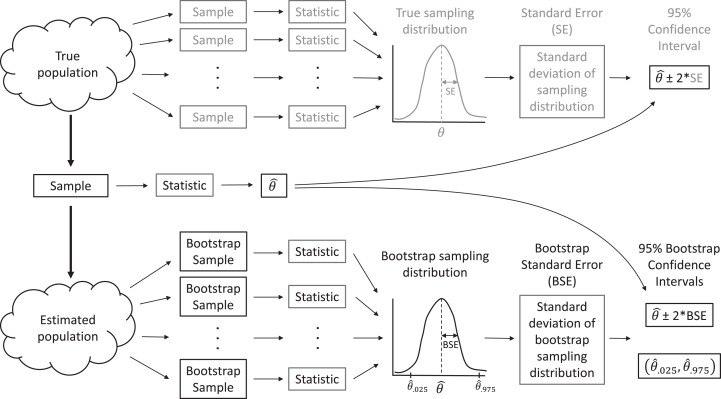
Many failures of management can be traced to the failure to monitor correctly, analyze data properly, and interpret analyses appropriately. And, because complex statistical methods take more time to develop and implement, they are likely to be less well understood, and more often misapplied by biologists that lack formal training in advanced quantitative methods. Thus, there is a real need for methods and analytical strategies that can provide robust answers, getting us 99% “of the way there” for 99% of applications.
I focus much of my research on providing general guidance to biologists on how to choose and apply appropriate “simple” methods. This guidance is not through consulting, although that is possible, but rather research that demonstrates appropriate use of statistical methods and modeling strategies. Examples include illustrating how to use bootstrap methods [1] to account for uncertainty in population viability analyses [2] and the implications of uncertainty for estimates of extinction risk [3-4], understanding the importance of choosing an appropriate time scale when analyzing survival data [5], strategies for working with autocorrelated data when estimating home ranges [6-7] or habitat selection parameters [8], and warning about the challenges associated with modeling time-dependent covariates [9] and the dangers of overfitting small data sets [10-12].
Literature Cited
- Fieberg, J., Vitense, K. and D. H. Johnson. 2020. Resampling-based methods for Biologists. PeerJ 8e9089 https://doi.org/10.7717/peerj.9089.
- Ellner, S.P. and J. Fieberg. 2003. Using PVA for management in light of uncertainty: effects of habitat, hatcheries, and harvest. Ecology 84:1359-1369.
- Fieberg, J. and S.P. Ellner. 2000. When is it meaningful to estimate an extinction probability? Ecology, 81:2040-2047.
- Ellner, S.P., J. Fieberg, D. Ludwig, and C. Wilcox. 2002. Precision of population viability analysis. Conservation Biology, 16:258-261.
- Fieberg, J., and G. D. DelGiudice. 2009. What time is it? Choice of time origin and scale in extended proportional hazards models. Ecology 90:1687-1697.
- Fieberg, J. 2007. Utilization distribution estimation with weighted kernel density estimators. Journal of Wildlife Management 71:1669-1675.
- Fieberg, J. 2007. Kernel density estimators of home range: smoothing and the autocorrelation red herring. Ecology 88:1059-1066.
- ieberg, J., J. Matthiopoulos, M. Hebblewhite, M.S. Boyce, J. L. Frair. 2010. Correlation and studies of habitat selection: problem, red herring, or opportunity? Philosophical Transactions of the Royal Society, Series B 365:2233-224.
- Fieberg, J. and M. Ditmer. 2012. Understanding the causes and consequences of animal movement: a cautionary note on fitting and interpreting regression models with time-dependent covariates. Methods in Ecology and Evolution 3:983-991.
- Giudice, J., J. Fieberg, and M. Lenarz. 2012. Spending degrees of freedom in a poor economy: a case study of building a sightability model for Moose in northeastern Minnesota. Journal of Wildlife Management 76:75-87.
- Mech, D. L. and J. Fieberg. 2014. Re-evaluating the Northeastern Minnesota Moose Decline and the Role of Wolves. Journal of Wildlife Management 78 (7), 1143-1150.
- Fieberg, J. and D. H. Johnson. 2015. MMI: Multimodel inference, or models with management implications? Journal of Wildlife Management 79(5):708-718